



Seabourn’s Robin West on the ultimate pole-to-pole expedition
Some numbers demand a moment of pause. 96 days. Two poles. Roughly 25,000 nautical miles traced along the spine of two continents, from the ice-locked channels of the Canadian High Arctic to the penguin colonies of South Georgia and the staggering white silence of Antarctica. This is Seabourn's 2028 Grand Expedition: Pole to Pole — the most ambitious voyage in the company's history, sailing Seabourn Venture from Reykjavík on August 16 and arriving in Buenos Aires on November 20.
At the center of it all is Robin West, Seabourn's Vice President of Expedition Operations and Planning. West has spent more than two decades in the expedition industry — leading voyages, selecting and training Expedition Teams, and helping design Seabourn Venture from the keel up. We sat down with him to understand what it takes to build a voyage that crosses a planet.
The 2028 Grand Expedition is Seabourn's second pole-to-pole voyage, but West is quick to point out that "second" doesn't mean familiar. This version goes further — literally.
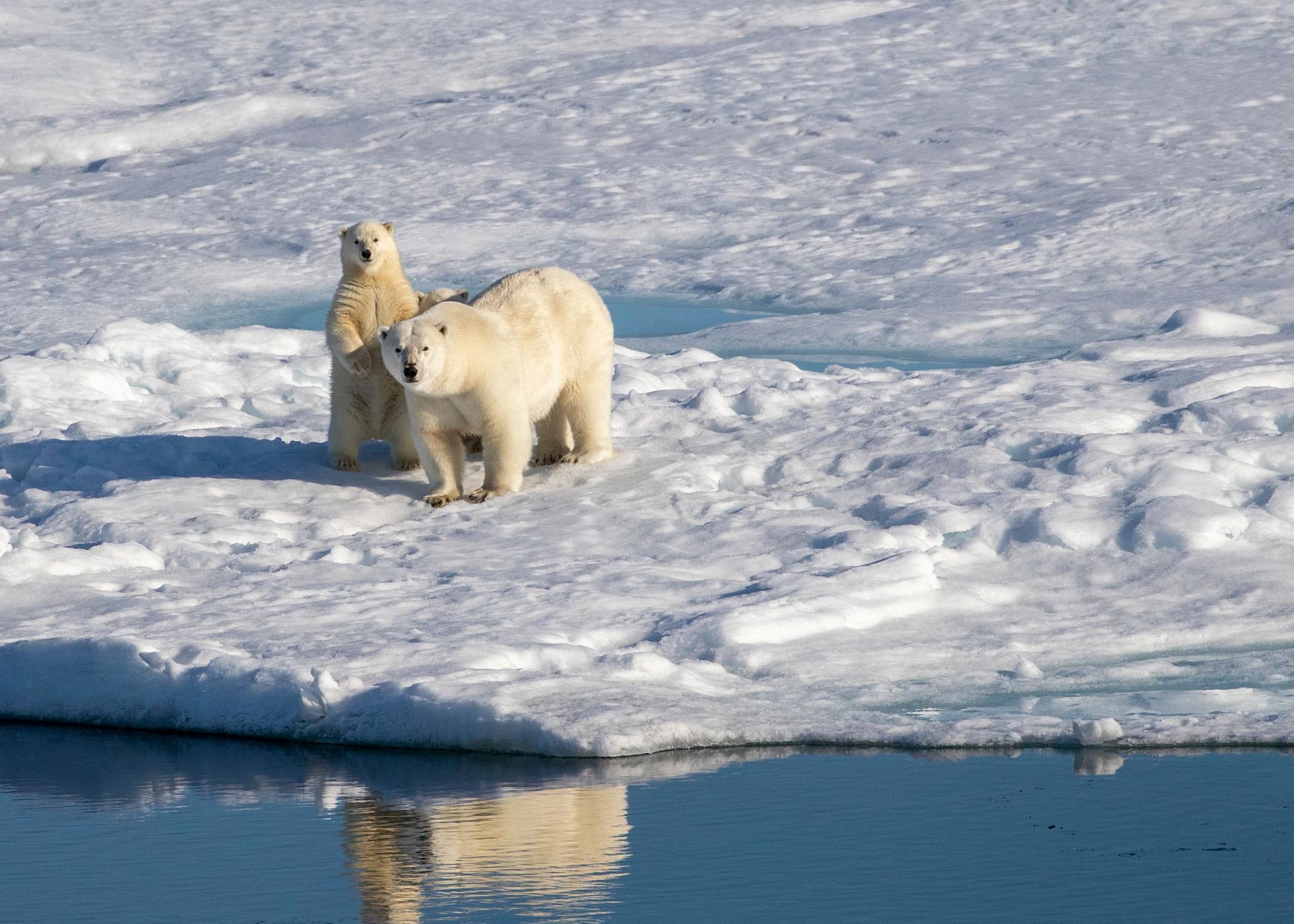
"We've added the full Ellesmere Island experience," he says, "which changes the character of the voyage entirely." Ellesmere Island, in the far north of Canada's Nunavut territory, is among the least-visited places on Earth. The tenth-largest island in the world, it has a single permanent settlement. "It is ruled by wildlife and sea ice and glaciers," West says. "Muskox, polar bears, Arctic wolves, belugas, bowhead whales — and a glacial landscape unlike anything else in the Arctic. Previous expeditions have counted 65 polar bears in 24 hours.”
That number tends to stop people. West lets it.
"When I think about places in the Arctic that are most like Antarctica — in terms of ship traffic, which is almost none, in terms of wildlife, in terms of the dynamic nature of every single day — Ellesmere is it. We've added two more days there for this voyage, and I think guests are going to find it's the section they didn't know they needed."
The timing, he explains, is also intentional. 2028 marks Seabourn's 40th anniversary and 15 years of expedition operations. "There's something right about marking that moment with a voyage that goes deeper than we've ever gone before."
Building a 96-day itinerary is a massive team effort, involving every department at Seabourn.
It's closer, West suggests, to solving a moving puzzle — one where the pieces shift with the seasons, the ice, and the light.
The route threads south from Greenland through the Northwest Passage —a historic waterway few ships have ever navigated — before tracing the eastern coast of North America through Labrador, Newfoundland's L'Anse aux Meadows, and Halifax. From there, the voyage continues through the Caribbean and down the length of South America: Devil's Island, Fortaleza, Rio de Janeiro, Montevideo. Then south again, into the Falkland Islands, South Georgia, and ultimately Antarctica.
"One of the things I'm most proud of with this itinerary," West says, "is that almost every port along the way is unique. From the moment you leave Kangerlussuaq until you reach Buenos Aires, you have virtually no repetition. You are covering thousands of miles of latitude, and each section feels entirely different from the last."
The challenge, he acknowledges, is that expedition travel doesn't submit to fixed schedules. "Flexibility is the most important word in this industry," he says. "Ice conditions change every single day. Sometimes you're looking at the charts with the captain at six in the morning and you make a calculated risk — you go north instead of south, or you hold position and wait. Sometimes it pays off. Sometimes you go to plan C. But the planning guests don't see is enormous. The goal is always to deliver the best possible experience on any given day, whatever the conditions."
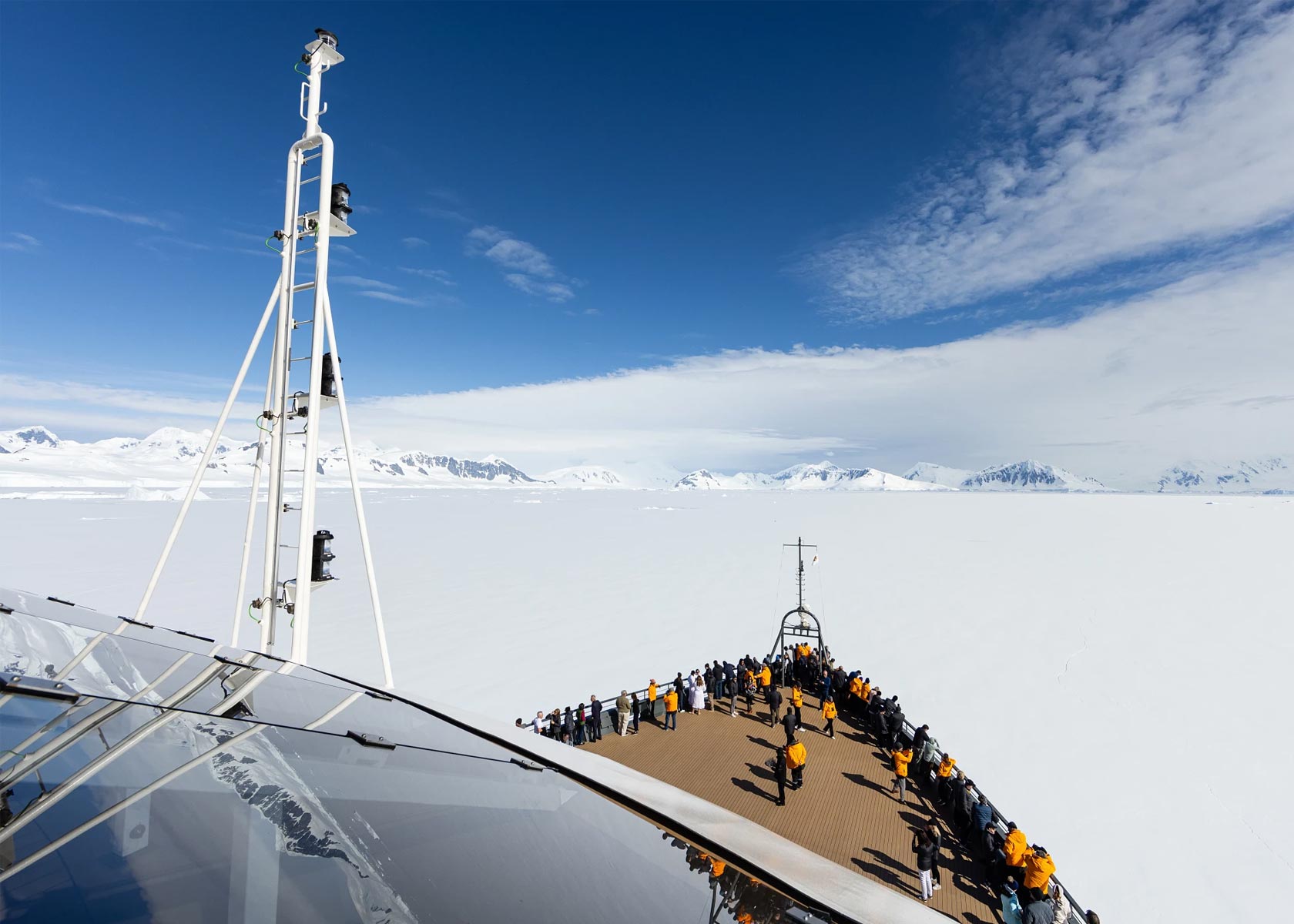
Seabourn Venture was built for exactly this kind of decision-making. As a Polar Class 6 vessel with forward-pointing sonar and a WASP system that feeds live depth data from a Zodiac running ahead of the ship, she can navigate safely in waters that have never been charted for larger vessels. "There are places on this itinerary," West says, "where we are genuinely the first ship of this size to have been. That's not marketing language. That's the reality of what this ship makes possible."
Ask West to describe the difference between the Arctic and Antarctica, and he takes his time.
"The Arctic has a human dimension that Antarctica doesn't," he says. "You're moving through communities — Inuit villages, Greenlandic towns, places where people have lived for thousands of years in conditions most of us can barely imagine. There's a cultural texture to it. You come ashore and you taste the local food, you walk through a town that has a hospital and a church and a school, and you realize these are people living extraordinary lives in an extraordinary landscape."
Antarctica, by contrast, is untouched in a way that almost no other place on Earth can claim. "I've been going to Antarctica for 24 years," West says, "and I have never — not once — come away from a trip disappointed. I have never seen a guest come away disappointed. It simply delivers. Every single time."
What makes it deliver, he argues, isn't just the wildlife. It's the combination of proximity and scale:
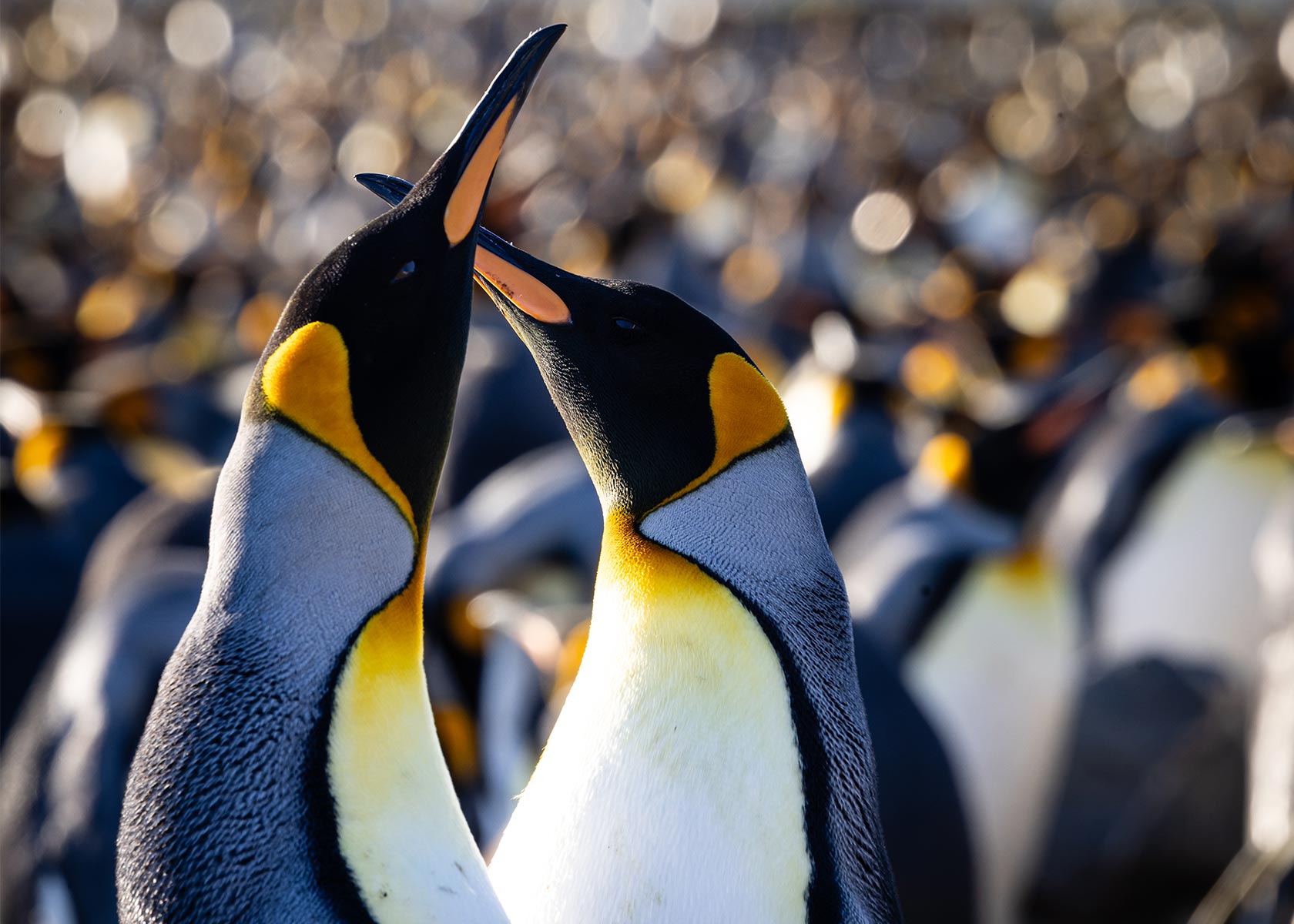
South Georgia, he says, deserves particular attention. "People think of Antarctica as the destination, and it is — but South Georgia might be the most wildlife-dense place I've ever stood. Over 450,000 pairs of king penguins. That's not a typo. The island is a wildlife sanctuary in the truest sense, and combined with the Falklands, you have days there that will stay with guests for the rest of their lives."
There's a version of expedition travel that asks guests to trade comfort for incredible experiences. West has no interest in that version.
"Luxury and expedition are not opposites," he says. "We proved that when Seabourn Quest first went to Antarctica in 2013 — that season produced the highest guest satisfaction ratings in Seabourn's history. What guests discovered is that the richness of the experience on shore and the richness of the experience on board aren't in competition. They amplify each other."
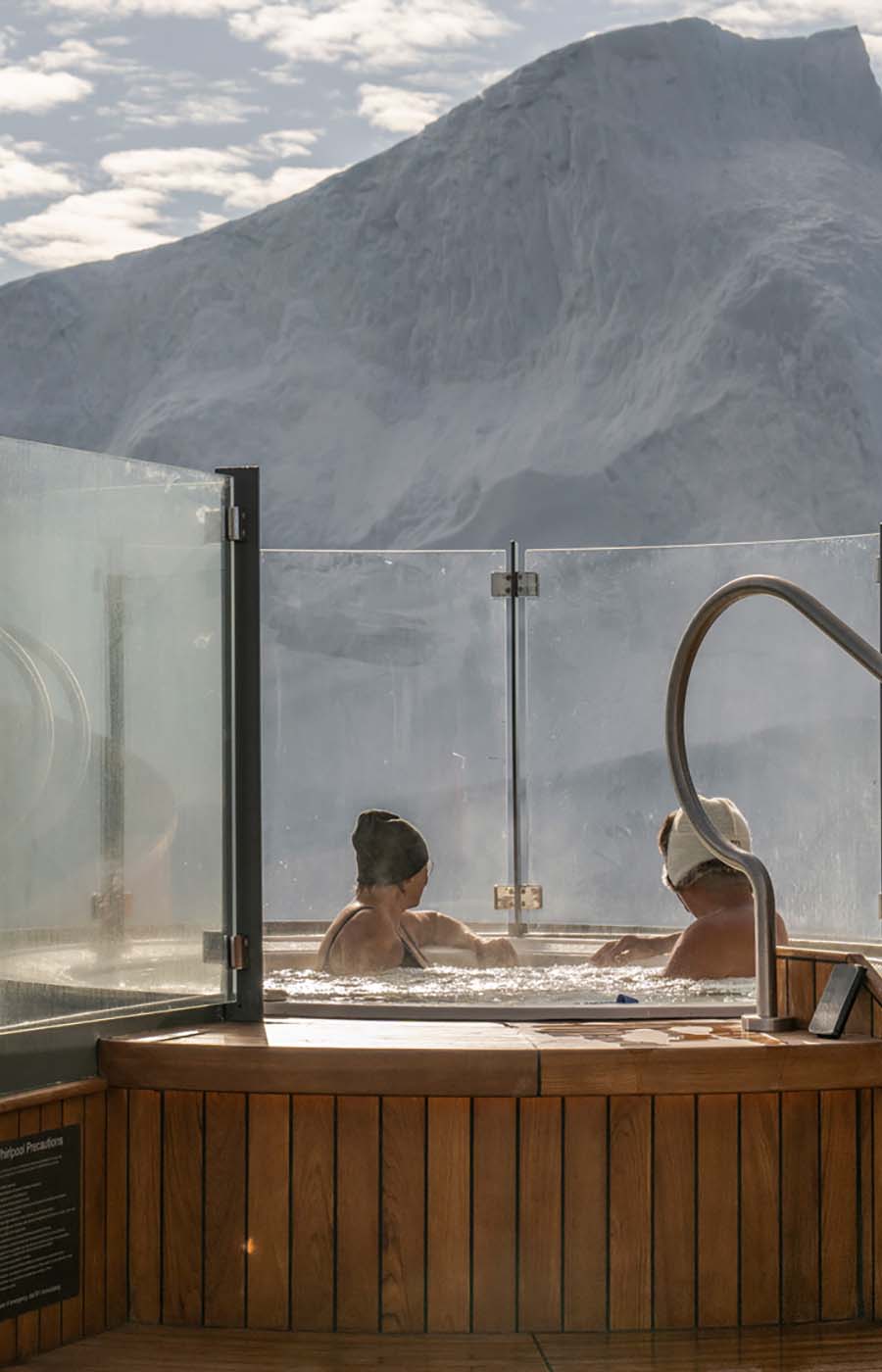
On Seabourn Venture, that means:
For the Grand Expedition, every guest kayaks in both hemispheres. "I want people to be able to say they kayaked in the Arctic and in Antarctica on the same voyage," West says. "We might even need to design a patch for that," he says with a laugh.
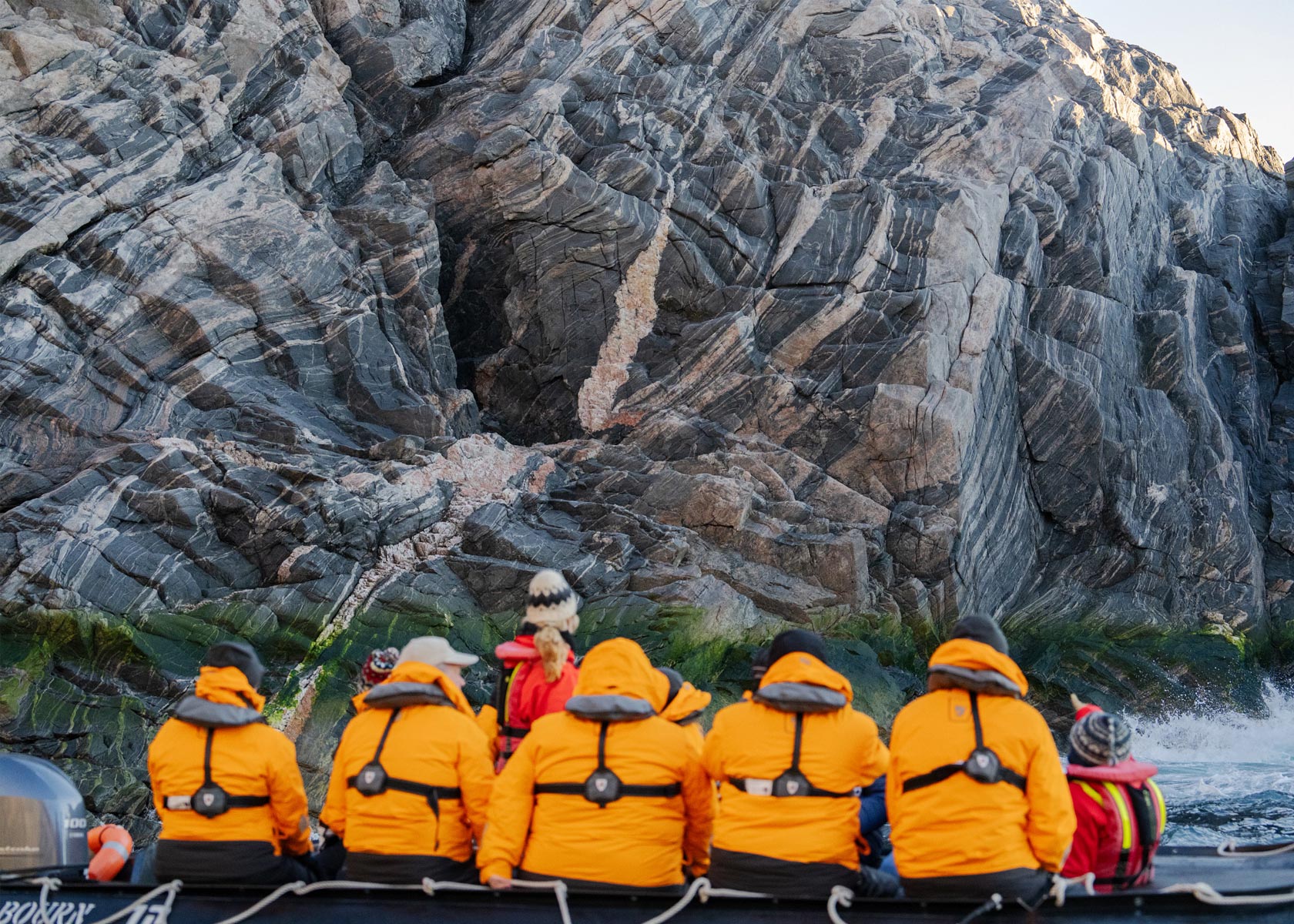
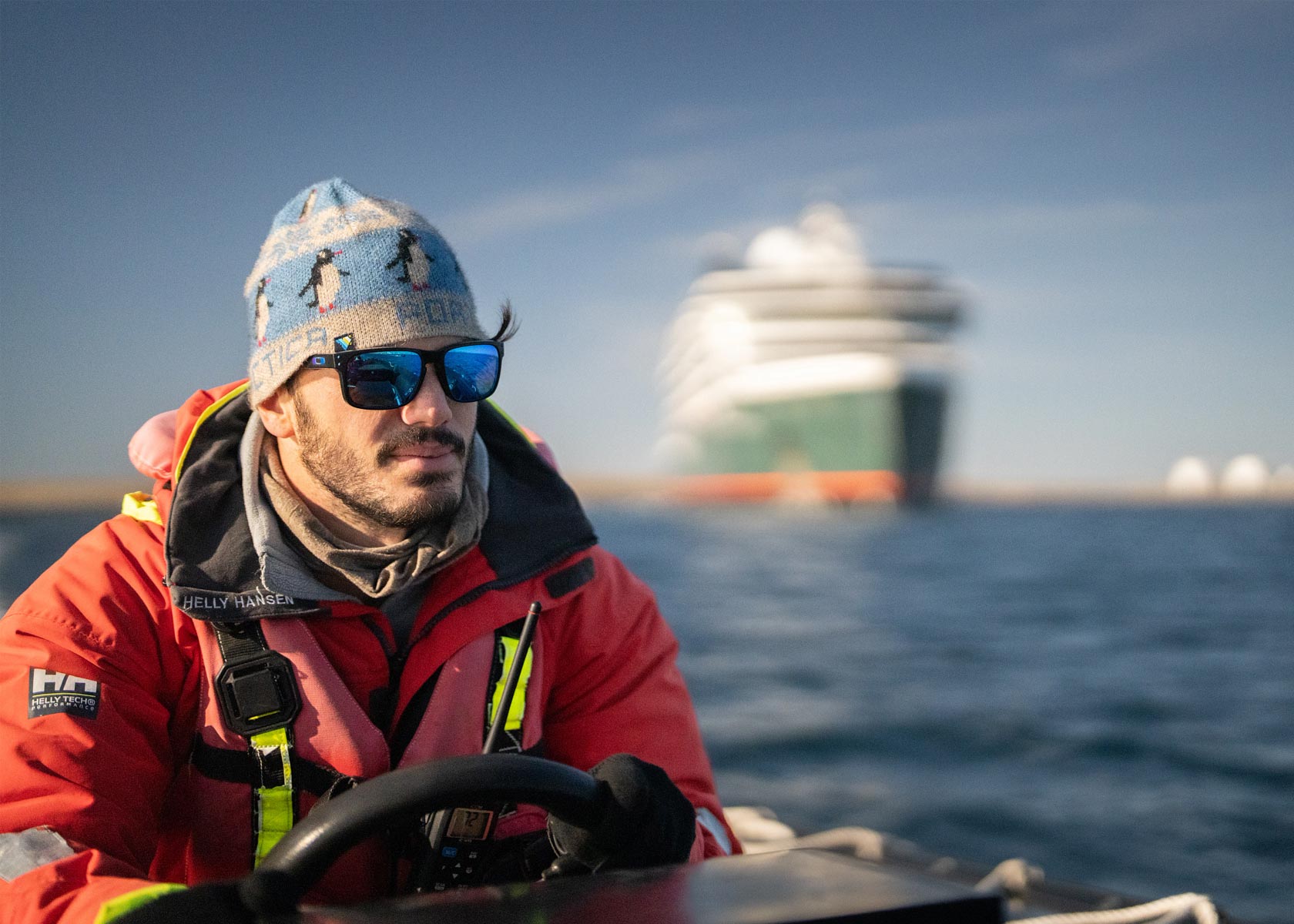
The Expedition Team — experts who are a part of daily life onboard and ashore — provides what West calls the connective tissue between ship life and shore life. At recaps, on deck, in the Zodiacs, and at dinner, the experience doesn't stop when the gangway comes up.
West is thoughtful when asked to describe the ideal guest for Seabourn’s 96-day Pole-to-Pole expedition.
"It's the intrepid traveler who wants to check every box in one voyage," he says. "Polar bears and penguins. The Northwest Passage and South Georgia. The High Arctic and Antarctica. But more than that — it's someone who understands that the best travel changes you. You don't come back from 96 days at both ends of the Earth and slot back into ordinary life unchanged."
He pauses. "People ask me what guests carry with them long after the journey. And honestly, I think it's the moments that surprised them. The morning a polar bear appeared close to a Zodiac. The evening in South Georgia when the king penguins were so numerous you couldn't see the ground. The silence of the Antarctic Peninsula at midnight, when the sun is still above the horizon, and you realize you truly have experienced something rare and beautiful."
For anyone hesitating at the commitment — 96 days is, after all, 96 days — West has a simple answer. "I've been going to the ends of the Earth for more than 20 years," he says, "and I can tell you honestly: it's not the expedition or the destination; it's who you become on the journey. This 96-day Grand Pole to Pole will change you.”
Consider these upcoming voyages:
96-Day Grand Expedition: Pole To Pole
DEPARTS: Reykjavik, Iceland
ARRIVES: Buenos Aires
Aug 16, 2028
from $109,999*
Explore Itinerary*Per Person, USD. Taxes and Fees are included. Additional terms apply.
Consider these upcoming voyages:
96-Day Grand Expedition: Pole To Pole
DEPARTS: Reykjavik, Iceland
ARRIVES: Buenos Aires
Aug 16, 2028
from $109,999*
Explore Itinerary*Per Person, USD. Taxes and Fees are included. Additional terms apply.
Announcing Seabourn’s First Grand Expedition
Meet the experts guiding guests every step of the way, only with Seabourn.
Exploring the Torngat Mountains by Sea
The moment Antarctica becomes real